
Magnetic Resonance Imaging (MRI) is a medical imaging technique that uses a strong magnetic field and radio waves to generate detailed images of the internal structures of the body. Here is a general overview of the MRI process:
- Patient Preparation:
- Before the MRI scan, the patient is asked to remove any metallic objects, such as jewelry, watches, and clothing with metal components.
- Patients may also be asked to change into a hospital gown.
- Screening:
- The patient is screened for any metal implants, devices, or conditions that may be affected by the strong magnetic field of the MRI machine.
- Positioning:
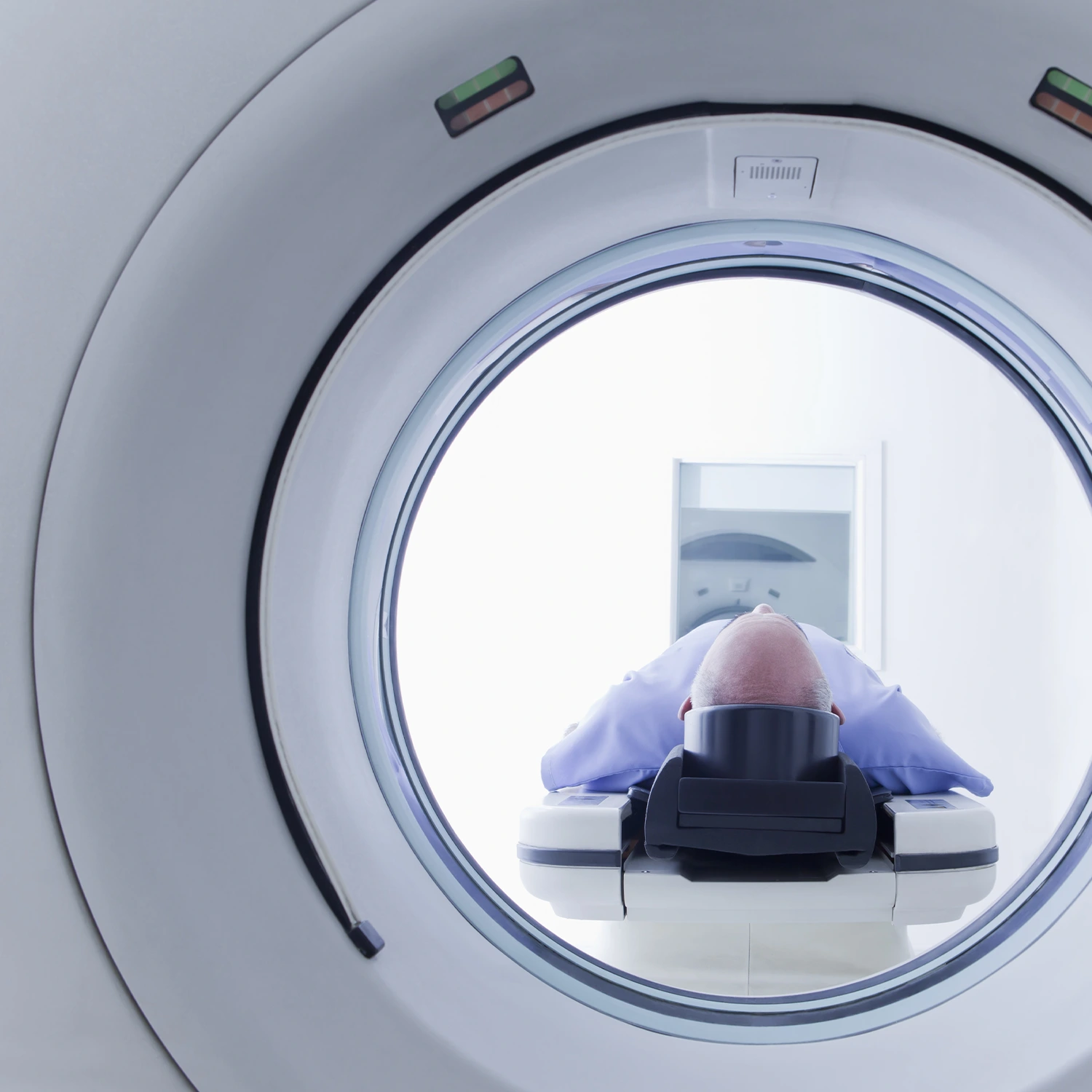
- The patient lies down on a motorized table that can be moved into and out of the MRI machine.
- It’s crucial for the patient to remain as still as possible during the procedure to avoid blurring of the images.
- Coil Placement:
- Radiofrequency coils may be placed around or near the area of the body being imaged to enhance image quality.
- Entering the MRI Machine:
- The MRI machine is a large, cylindrical magnet. The patient is moved into the magnet, and the part of the body to be imaged is positioned at the center of the magnetic field.
- Radiofrequency Pulse:
- When the patient is inside the machine, radiofrequency pulses are directed at the body. These pulses temporarily disrupt the alignment of the hydrogen atoms in the body.
- Signal Detection:
- As the hydrogen atoms return to their normal alignment, they emit signals that are detected by the MRI machine’s receiver coils.
- Data Processing:
- The signals are processed by a computer to create detailed cross-sectional images of the internal structures of the body. Different tissues produce different signals, allowing for the creation of high-contrast images.
- Image Generation:
- The processed data is used to generate 2D or 3D images that can be viewed by a radiologist or other healthcare professional.
- Completion and Review:
- Once the imaging is complete, the patient can leave the MRI machine. The images are reviewed by a radiologist, who interprets the results and provides a report to the referring healthcare provider.
It’s important to note that MRI is a non-invasive imaging technique, and it does not use ionizing radiation like X-rays or CT scans. It is commonly used to visualize soft tissues, organs, and certain medical conditions.